News, thoughts, and ramblings on the world of biology.

Sunday, May 18, 2008

Coprophagy killed the cat


Cheetahs have posed a challenge to zoos and conservation programs for decades, because they are extremely fickle breeders and have almost no genetic diversity. Another obstacle is that this species is prone to developing AA amyloidosis, a protein folding disorder. Animals with this condition develop plaque and aggregates of misfolded protein fbers in the brain, and they eventually die. It is along the same lines as mad cow disease and Alzheimers, both of which feature faulty protein folding and amyloid buildup

While brain plaque doesn't seem to be a likely vector for transmitting a disease between individuals, a study recently published in the Proceedings of the National Academy of Sciences USA reports that amyloidosis is actually contagious and highly transmissible between animals. It appears that the amyloid proteins are present in an afflicted animal's feces, and if another cheetah is exposed to the feces they can also develop the disease. The title of this post was intended to be punny:the data doesn't suggest that cheetahs regularly engange in coprophagy. Cheetahs do--albeit indirectly--ingest each other's feces, however. The amyloids from the fecal matter could contaminate the zoo exhibit by getting into the ground, food, or water, or they could be transferred from animal to animal during grooming. The new findings are very important for the future of cheetah conservation programs, see this New Scientist article about the research for even more details.


(Image credit)
.

Friday, May 16, 2008

Hog Foot Holler

I am planning to set up my official blogroll in the sidebar soon, that is something I've been meaning to add for ages but just haven't had time. Look for that update in the near future, but in the meantime I wanted to mention a great new blog, Hog Foot Holler, that a friend of mine just started. Mark is a professional conservation biologist and naturalist, and his posts are full of great information and pictures of a wide variety of wildlife. He just started the blog this month, and has already put up great posts on plants, amphibians, birds, snakes . . . This blog is definitely a must-read!

Heebie jeebie observations

Winding down from a day in the field, and I have a handful of observations:
1) There are lots of ticks in the forest.
2) They seem to have frustrating fondness for me (I am immune to poison ivy and never get mosquito bites, I wish I was equally repellent to arachnids).
3) Although spontaneous generation is no longer taken seriously in science, I think that seed ticks have broken natural laws and mastered the art of appearing out of nowhere...the little beasties turn up on legs/arms that were pristine only minutes before, even after changes of clothes, showering, etc.
4) Even once I have completed the de-ticking process, I still think I feel them crawling on me for about a day afterwards, and the imaginary ticks actually cause much more disruption/stress than the real ones . . . I wonder if anyone has invented a spray for paranoia?

Thursday, May 15, 2008

Holding Strong During Hibernation


One issue that has perplexed physiologists for years is how hibernating mammals, such as bears, avoid extreme muscle wasting during hibernation. How does a mammal prevent its muscles from degrading after going for months without eating? A new study offers some clues. A group from the University of Barcelona studied hibernating bears and identified specific blood plasma components which prevent protein breakdown. The bears' metabolisms preferentially burn their stored fat and therefore preserve muscle mass that would otherwise be rapidly degraded and broken down for energy. The researchers conducted an experiment in which they injected rats with bear plasma, and observed a 40% reduction in chemical reactions that cause animals consume muscles for energy.

Snip from the Science Daily report:

In general, the destruction of muscle tissue (cachexia) is a sign of metabolic stress, and in humans is associated with pathologies such as cancer or AIDS or with long periods of malnutrition, immobilization and microgravity. The main channels of protein breakdown in cells are lysosomes and proteasomes, which are responsible for approximately 80% of the proteolytic activity. But the mechanisms of protein breakdown are still not well understood. "Compared with our knowledge of protein synthesis, we know very little about the processes of breakdown, especially about regulation. This possible inhibitory effect of hibernating bear plasma may regulate proteolysis in a natural way, which may have a series of implications for treatment," notes Argilés.

In 1993, the Cancer Research Group at the Biochemistry and Molecular Biology Department at the UB was the first to describe the ubiquitin-proteasome system, the proteolytic system involved in muscle mass loss in pathological situations. This system – an enzyme cascade – is the main cell pathway for protein turnover and also participates in key cellular processes such as the cell cycle, DNA repair, and so on. Years after this first discovery, the same team of scientists at the UB has again broken new ground in detecting a possible natural inhibitor of the cellular mechanisms involved in protein metabolism.


FUSTER, G., BUSQUETS, S., ALMENDRO, V., LOPEZSORIANO, F., ARGILES, J. (2007). Antiproteolytic effects of plasma from hibernating bears: A new approach for muscle wasting therapy?☆. Clinical Nutrition, 26(5), 658-661. DOI: 10.1016/j.clnu.2007.07.003

(Image credit)

Spring Semester Summary

Finals have been officially over for a week now, so I'm a little past-due for the ritual retrospective musings that I usually post to wrap up each semester. This was definitely the most intense semester I've had yet. I discovered my limits, that's for sure. I was taking 18 hours, working 5 nights a week, doing research and acting as SCB president and education coordinator for AWIS...in a nutshell, I had a lot on my plate. I can't complain, though, because I wouldn't be involved in all those things if I didn't really care about them. Even though my schedule felt hellacious sometimes, it was full of things I am passionate about, and that is the key difference that keeps things bearable.

This semester was also a good example of why undergrads have to take so many required courses that aren't necessarily in their specific area of interest. I had to take several a couple of classes that I probably wouldn't have registered for voluntarily, but I tried to go in with a good attitude and actually ended up enjoying them. It's interesting, because one class that I was really looking forward to turned out to be slightly nightmarish, and the one that I was dreading actually became something to look forward to. I don't name names on this blog, so I won't go into anymore detail than that, but suffice it to say that very often a professor makes or breaks a class. I hope to be a professor myself someday, so I try to pay attention to different teaching styles, what works vs what doesn't, and I definitely learned many "do's and don'ts" this spring. I managed to get A's in everything, although I have never felt like I had to work so hard for an A in a biology class as I did this spring, more due to overall load than actual difficulty of the material.

I've already discussed the new summer job, and I'll have details up about my fieldwork in Belize very soon. I have a lot of things to get done, but the slower pace is definitely a nice change. I've read five books and watched three movies since finals ended, that is more movies than I had watched in the entire year before this past week!

I'm also moving towards more serious searches for grad programs and advisers. I am going to the mammal meeting in South Dakota this summer to present my shrew research, hopefully it will be a good networking opportunity. I have had such great mentors here at Auburn, and I'm a little nervous about stepping out and trying to find another school with the same support network. I had a nightmarish REU experience last summer (I won't discuss details publicly, but it was definitely a bombed summer and I was very disappointed), and that really opened my eyes to the value of having good mentors. It was a painfully stark contrast to my experiences with advisers and professors here at my own university, and it opened my eyes to the unfortunate existence of the "other" side of academia.

So anyway, busy busy, but overall the spring was definitely satisfying. I am really looking forward to the fall semester, I have an all-star roster of classes lined up: Mammalogy, Herpetology, Entomology, Plant-Animal Interactions, and an independent directed readings project in Anthropology. It's 18 hours again, with even more hours in the lab than I had this past semester, but most of that "lab" time will be in the field. I have already had all but one of the professors in previous classes, and the group includes many favorites. I'm also going to be a co-instructor for our new freshman Conservation Biology Learning Community course, I'm extremely excited about that, although a little nervous....I hope the students like me, and I really want to help get them interested in the material as well...hopefully it will turn out well.

This post is now approaching novel-length, so I should wrap it up. I'll end with a freebie Charlie picture from earlier in the spring. The poor guy prefers a much earlier bedtime than I do, but he hates going into any room alone. So when I'm up late, he will slowly inch from wherever I am towards the bedroom, one little bit at a time, but always making sure he can keep an eye on me...as we see here, where his schnozz is the only thing left in the room. Is there anything sweeter than tired puppy dog eyes?

Nudi-pics

No, not that kind of nudi-picture, sorry. This month's National Geographic has a feature article on nudibranchs, possibly the most flamboyantly hued members of the animal kingdom. These Crayola-colored creatures are actually shell-less gastropods, and they come in literally every color of the rainbow. NG has an online photo gallery to supplement the print article, head over and check it out, definitely the must-see website of the week!

Tuesday, May 13, 2008

Notes from the Ornithofiles

Some bird observations of note, from the last week and a half or so:

-When I was working in the Black Belt last week, I saw a Common Night Hawk, (Chordeiles minor), a new one for my life list. It was around 10:00 in the morning, so he was up and about either way too early or way too late. He did the diving display and everything. They are very distinctive, the underside of their wings is black with a very conspicuous white spot, and their flapping pattern is erratic, very reminiscent of bats.

-I saw a female mallard doing the "broken wing" display, trying to distract us from her brood of ducklings. I couldn't find a video of a duck performing this behavior, but here is a clip of a killdeer doing a very similar version:

-Turkey Vulture vs windshield incident on the way back from the Black Belt on Saturday, luckily neither party sustained serious damage.

-There is a Brown Thrasher (Toxostoma rufum) on the south side of campus that is lacking any tail feathers, Charlie and I see it every day on our evening walk.

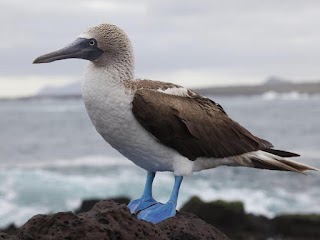
-I now have a pair of resident Gray Catbirds (Dumetella carolinensis) in my backyard! This species is the shy, lesser-known cousin of the Northern Mockingbird (Mimus polyglottos), both are in the family Mimidae. I happen to loath mockingbirds, they always ambush Charlie and I and pull patches of fur out of his rump during nesting season, but I am fascinated by Catbirds. There is a pair that nests outside the library on campus, but other than that I had never seen them in the wild until a new pair moved into my backyard, yesterday I spent quite a while watching them gathering nest material. I've heard them described as "drab" birds, but I think that their plumage has a kind of simple elegance. I am going to try to get some good shots of my "own" pair, but birds are very hard to photograph, so above is a shot from the National Zoo's photo archive.

(Image credit)

Monday, May 12, 2008

Got antibodies?


BPR3
New Scientist recently reported on an interesting study that showed a correlation between consumption of cow's milk and risk for developing diabetes. This is not a new idea, a Finnish study showed the link back in 1993. Snip from the article:

One explanation is that beta-lactoglobulin, a protein in cow's, but not human, milk prompts babies to make antibodies that also attack glycodelin, a protein vital for training the immune system. The mistuned immune system then mistakenly destroys insulin-producing pancreatic cells, leading to type 1 diabetes.

What is new, however, is a study by Marcia Goldfarb, of the company Anatek-EP, has detected beta-lactoglobin antibodies in children with Type-I diabetes, supporting the hypothesis posed by Finnish researchers over a decade ago. This is significant for several reasons. It could help people to manage their children's diets to reduce risk for development of diabetes, and could also conceivably lead to more effective treatments for those afflicted with the disease.The article is part of the journal's Author Choice Free Access program, so you can download it for free, go check it out!

Goldfarb, M.F. (2008). Relation of Time of Introduction of Cow Milk Protein to an Infant and Risk of Type-1 Diabetes Mellitus. Journal of Proteome Research, 7(5), 2165-2167. DOI: 10.1021/pr800041d

Dog duo

I'm dog-sitting while some friends are out of town, so Charlie has had a little buddy to hang out with for the last couple of days. And I do mean little, Monk is a Shih-tzu, his body isn't much bigger than Charlie's head. I've never owned a small breed before, and it had never occurred to me that a dog would be able to get under, around, and into so many nooks and crannies. Monk has discovered corners of this place that I hadn't ever noticed in three years of living here.

There is also an interesting contrast in their appetites. Charlie is pretty delicate eater: he is picky to the point of absurdity. Monk, despite being around 1/10 Charlie's size, appears to have a voracious appetite and hoovers up anything even semi-edible that he finds.

The two are getting along great, although there are definitely jealousy issues when Monk tries to jump into my lap (I would probably incur significant damage if Charlie tried that, he is almost bigger than I am). Luckily Charlie is ultra-laid back, he doesn't have an aggressive bone in his body, he has just been very sulky whenever he thinks I am paying too much attention to the little guy. Because I always take advantage of excuses to post Charlie pics, below is a shot of the dynamic duo goofing around together in the backyard:

Saturday, May 10, 2008

Media alert

I am catching up on my magazines this weekend, finally. Due to my chaotic schedule this semester, I am behind at least two issues in Discover, Scientific American, National Geographic, and Natural History, and I've only had time for a handful of papers from the latest Journal of Mammalogy. This I morning came across a very interesting article in Scientific American, which discusses the pros and cons of the development of "Science 2.0." In the spirit of the subject, they posted the article free-access on their website, go check it out. The open-access movement seems to be gaining steam, but there are still many areas with fuzzy boundaries, such as discussing unpublished data, lab protocols, etc etc.

The article brings up some important issues that can be obstacles to establishing an open-forum culture for scientists, but it doesn't squash hopes that progress can be made, and it is definitely worth a read. The icing on the cake is that our friend Bora is quoted in the concluding paragraphs of the article!

Does this make me a nerd, a geek, or both?

Now that I have a small amount of downtime (in between finishing my summer english class int the one month before I leave for Belize, chugging away on honors thesis stuff, and working in the Black Belt), it is amazing to be able to spare time here and there to do completely unproductive things. I am definitely going to have to adjust to this.

Fortunately, Dave has provided information on an intriguing new game/community, Fold-It!, that acts as a very efficient time-killer while ALSO providing a way for people to contribute to solving complex protein folding problems that might even have practical applications later on. I have always been a big fan of puzzle games: I am convinced that Tetris is the best game that ever has been, or will be, invented. I don't care if Nintendo and Playstation come out with interactive, total immersion games where you can smell the spaghetti that Mario had for lunch, those falling blocks will never go out of style. Fold It! gives you a puzzle game that requires strategy and a little bit of knowledge, and also has forums to discuss various protein folding problems...it sounds ultra-nerdy, but I've spent the last hour starting my account and it's actually pretty neat, definitely worth downloading the free software and testing out. Be warned, it is addictive...

(One other warning, if you are a Firefox user, you can view the page with Firefox but you have to switch to IE to download the game. Happy folding!).

Wednesday, May 07, 2008

Switching packs


When I was a kid, the highlight of every August was going back-to-school shopping. I analyzed every trapper keeper (wow, do I feel old for remembering those . . .), every little animal-shaped eraser, all the pouches and pockets and boxes and art supplies . . . I took it all extremely seriously. The crowning glory of the shopping trip was the selection of that year's backpack. I don't remember why I felt like each new grade necessitated a new backpack, but it was kind of like a rite of passage, something to symbolize each step up the academic ladder. The new backpack was definitely the most significant part of the whole shopping expedition.

Now that I am a big girl paying for things myself, I use and re-use items as long as possible, basically until they completely succumb to entropy. I've had the same school bookbag for four years now, and don't plan to replace it anytime soon. It is kind of nice to have a backpack that is broken in, stretched in all the right places, etc. But I have not completely lost out on the Backpack Rite of Passage. Each spring when classes are over, I get to stow my "academic backpack" away for the summer. and switch over to predominately using my fieldwork daypack. Pulling that one out and stocking it (GPS unit, field gloves, bug spray, headlamp, spare shoelaces, field notebook, emergency ketchup and Splenda packets, leatherman tool, Nalgene, batteries, collecting jars, etc etc etc) gives me a lot of simple satisfaction. Don't get me wrong, I enjoy classes and don't resent the academic role that comes along with the school pack, but the field pack holds many interesting memories past of activities, in addition to anticipation of future adventures.

It's just a cheap, off-brand backpack that I picked up for $8 at a consignment shop. I wasn't specifically looking for a fieldpack at the time, but it was affordable and it happened to be in my school colors, so I picked it up on a whim. That was several years ago, and since then it has gone up mountains, across deserts, along coastlines, and through forests with me.

The pack swap comes pretty fast this year. Today was my last day of finals (I'll have some musings on the spring semester in an upcoming post), and tomorrow I jump straight into my new summer job, doing field surveys in the Black Belt Prairie region, for the Alabama Natural Heritage Program. I'll be doing this job until the end of June, and I leave for fieldwork in Belize in July (more on that in a later post).

It is kind of strange to switch modes so fast. Yesterday my entire life revolved around memorizing integral membrane proteins and endocrine pathways, and tomorrow I'll be spending all day in the field setting up transects and ground-truthing prairie plots. Such is life. All of us have our own versions of the different "packs," literal or figurative, that represent different parts of who we are and what we do. I guess you know that you are on the right path when you look forward to dusting those old packs off again each year, strapping on the gear and setting forward to see where it will take you this time.